Swamp Rabbit Trail Study Trip to Greenville
Written by: Emily Schreer, Policy and Planning Manager
In Greenville, South Carolina, the 28-mile Swamp Rabbit Trail has shaped how the city connects its neighborhoods, grows its economy, and invests in public space. In early February 2026, Sports Backers brought together developers, artists, foundations, nonprofits, and representatives from Richmond, Henrico, Chesterfield, Hanover, and Ashland local governments for a study trip to see it for ourselves.
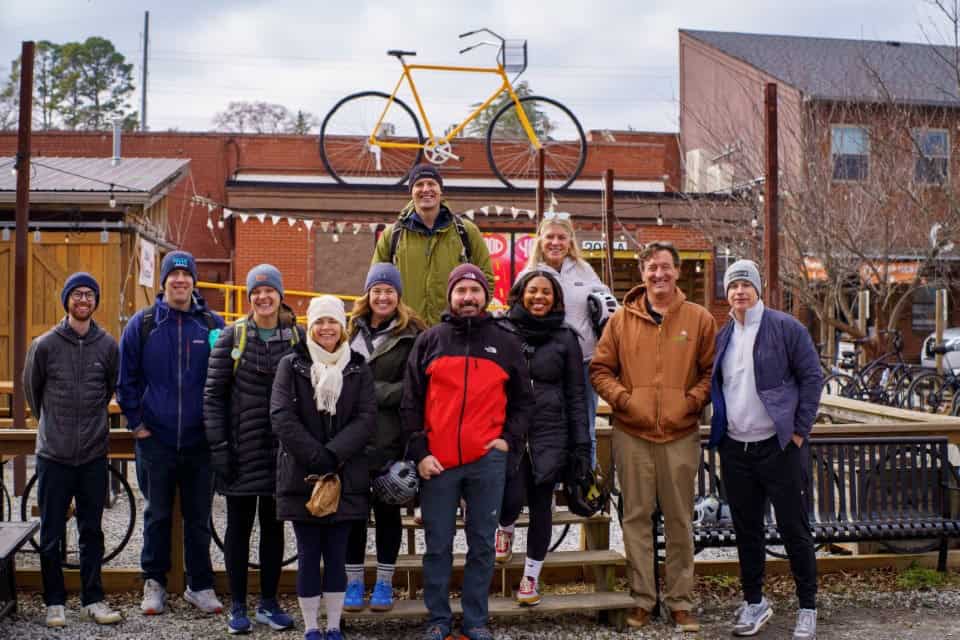
Our group of 24 cross-sector participants had the chance to bike the trail, hear from local leaders, and come together to brainstorm about the Fall Line. This trip gave us an opportunity to experience a well-established trail system while strengthening connections across our region.
We are entering a new planning phase for the Fall Line as we start to really visualize the trail taking shape on the ground. Now is time to think about trail-oriented design, art activation, and community-informed design along the corridor. This phase calls for insights about how people will use the trail, how they will encounter it in their daily lives, and what role communities should play before, during, and after it is built. The Swamp Rabbit Trail in Greenville offered a useful case study as we consider the great potential of the Fall Line to positively impact our region in lasting ways.
Experiencing the Trail FIRSTHAND
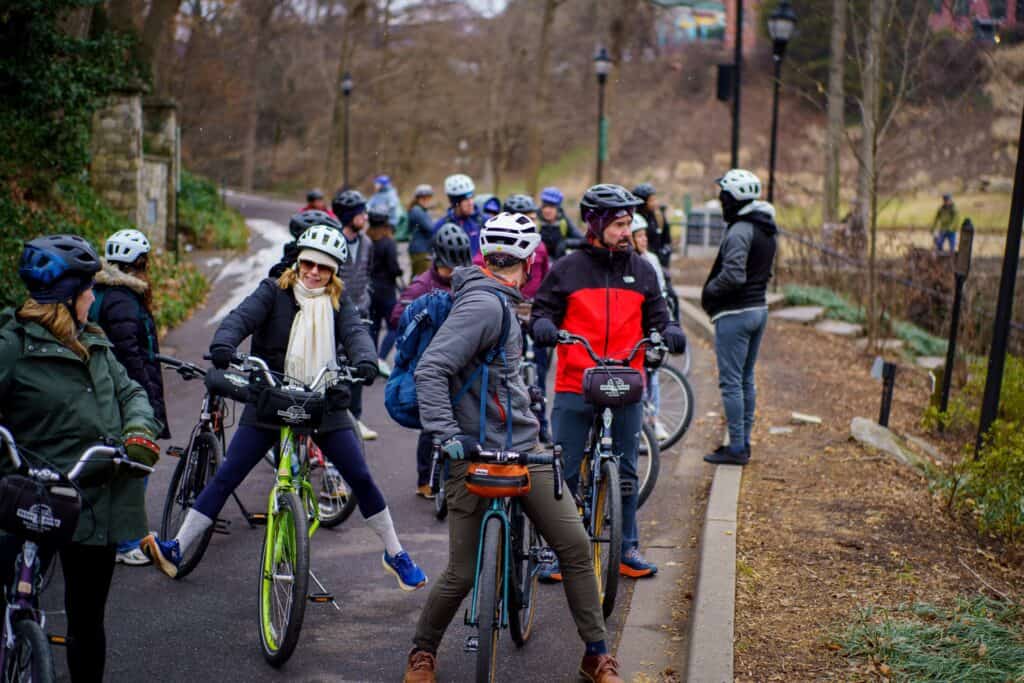
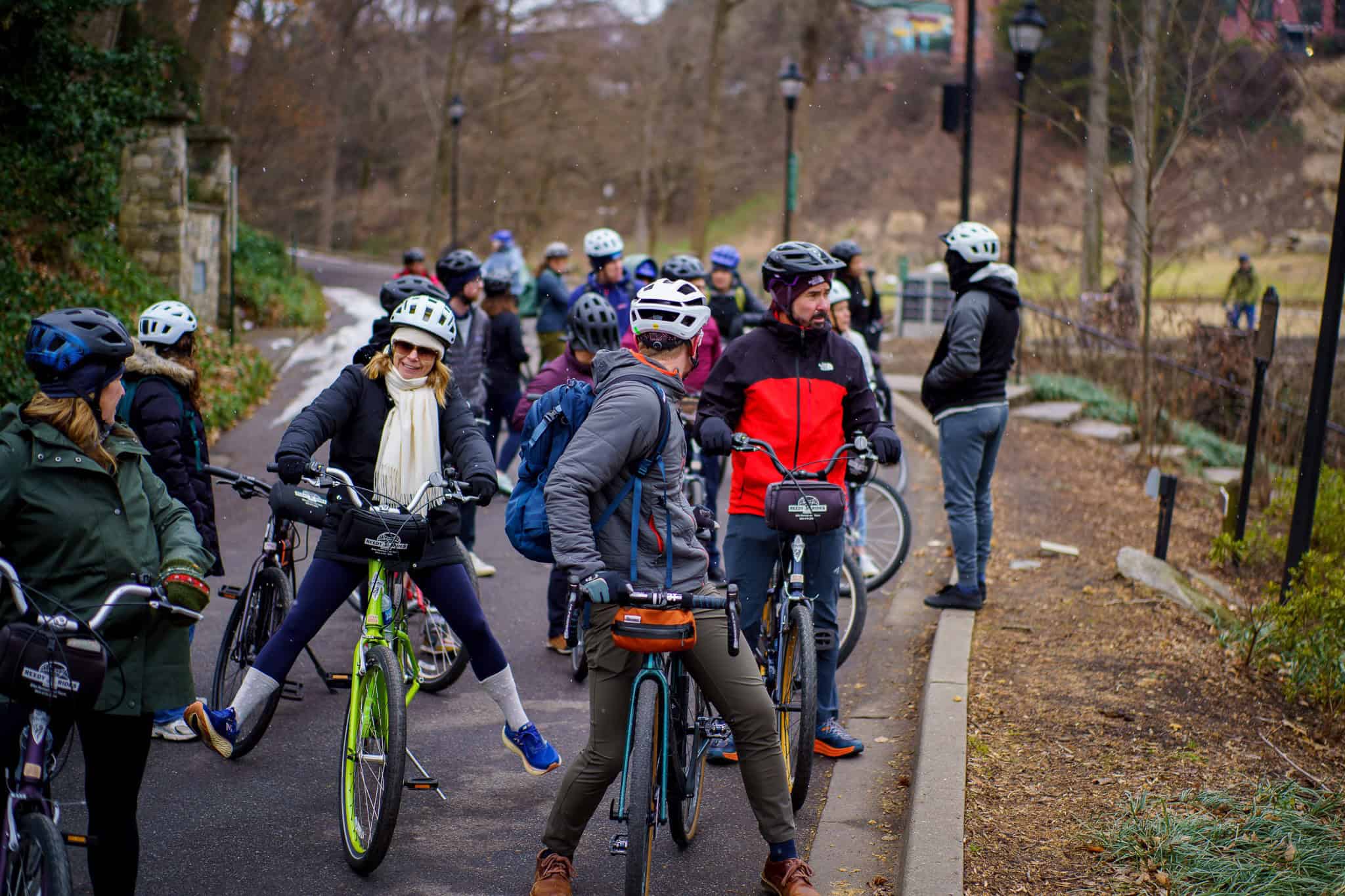
On the first full day of the trip, our group bundled up for a morning bike ride as it suddenly started to snow. But we were not the only ones on the Swamp Rabbit Trail! Over the course of our visit, we experienced the full range of Greenville’s February weather: from cold and rainy, to heavy snow, and, eventually, some sun. In every condition, however, there were people out on the trail walking, biking, and running. The steady presence of trail users really stood out to us. Our local guides assured us that if the weather had been perfect, our large group might not have been able to move as easily as we did along the trail. This comment spoke to the everyday role the Swamp Rabbit Trail plays in Greenville, and the level of use it sees on a regular basis.
As we began our ride, we saw firsthand how well the trail connects downtown hotels and restaurants with parks, neighborhoods, and cultural destinations. The trail forms a central spine through the city, and its spurs link different areas to downtown. Local leaders and community members alike referred to the trail as a transportation system, similar to the way people in a larger city might refer to a subway. More than just a recreational trail, the Swamp Rabbit and its spurs are viewed and spoken about as an essential active transportation network.
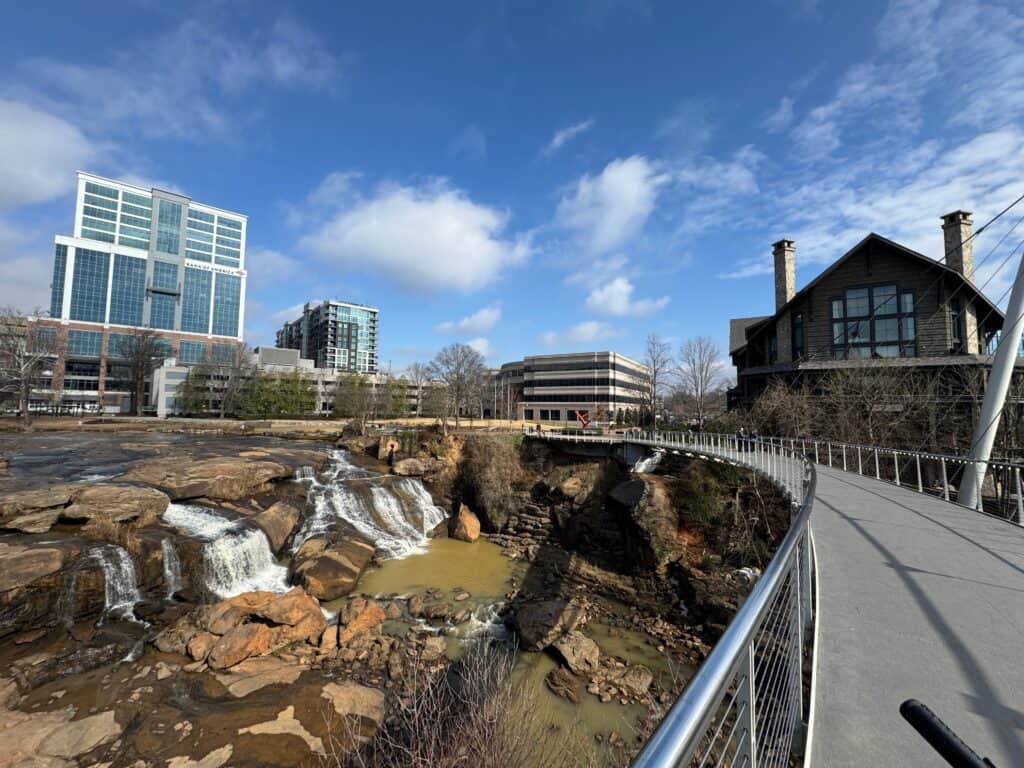
One of the most striking and picturesque moments of the ride came as we passed the Liberty Bridge. Not too long ago, this crossing was a four-lane highway! Today, it is a pedestrian bridge that visitors can use to stroll from the Grand Bohemian Lodge over the cascading waterfalls of the Reedy River. This high-end hotel was built after the trail, as a result of the Swamp Rabbit reviving Greenville’s downtown and tourism scene. Below the bridge, the Swamp Rabbit Trail follows the river’s edge closely, with diverging walking paths that blend seamlessly from pavement into the natural rocks of the riverbank. These subtle shifts in material and form invite people to explore and engage more closely with the landscape.
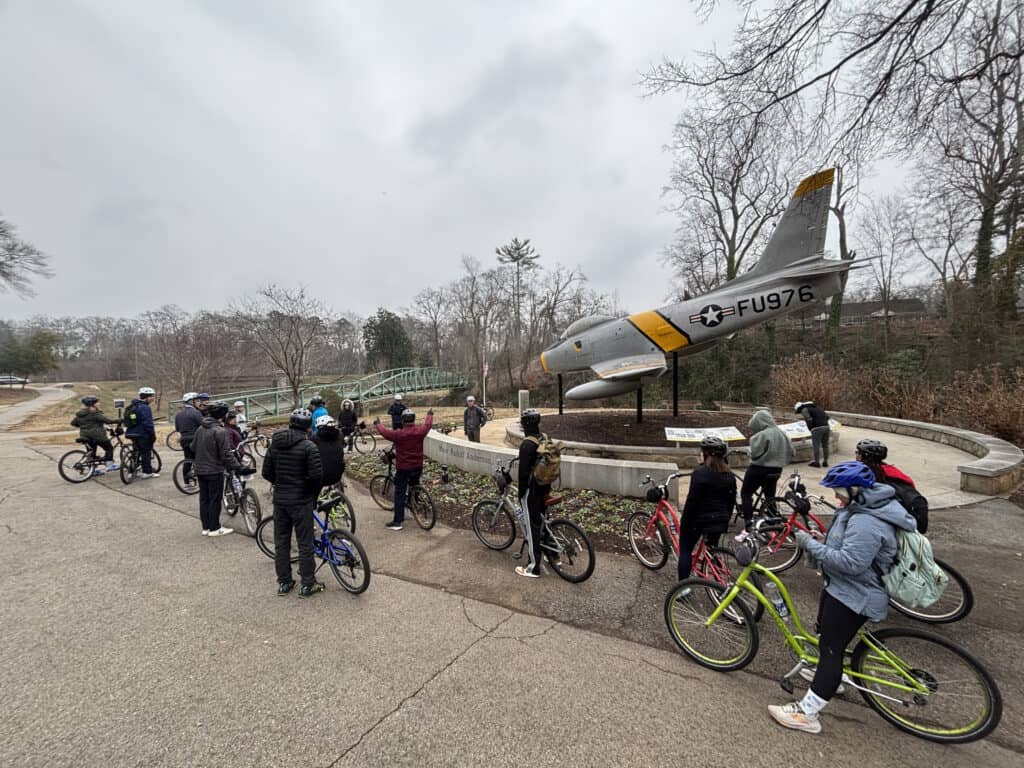
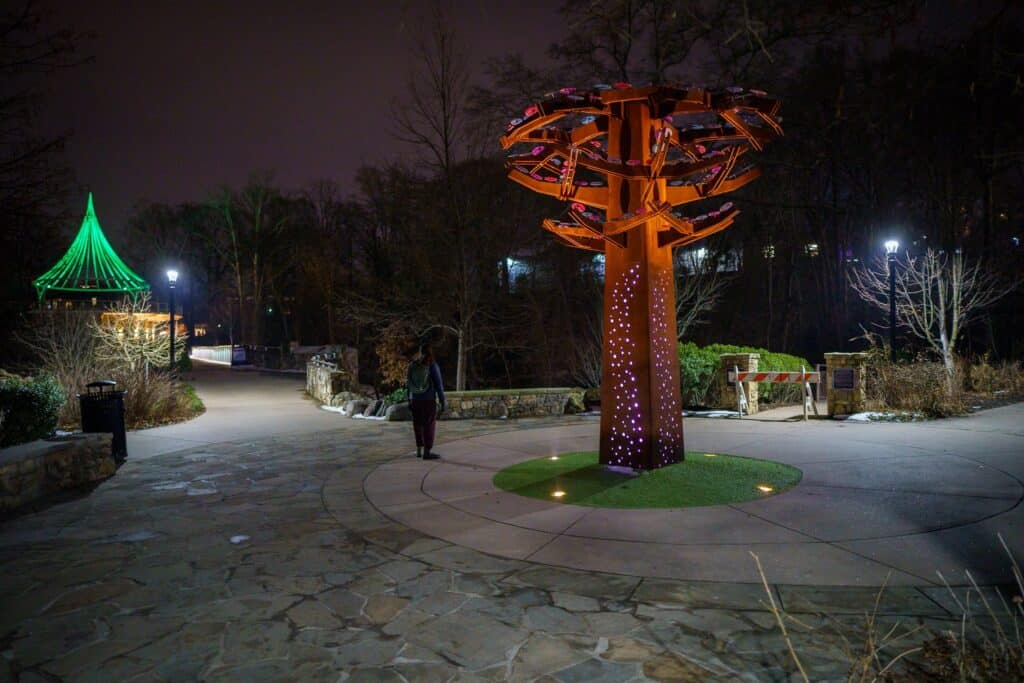
Further along on our ride, we saw memorials that presented Greenville’s history, healing spaces dedicated to cancer patients, and public art sculptures designed to light the trail at night. These elements encouraged us to pause our ride, gather as a group, and spend time in specific places along the trail. Having small moments for reflection and conversation helped us learn more about both the trail and Greenville as a whole. These micro-experiences reinforce the idea that a trail can do so much more than just move people from point A to point B; it can also tell stories, hold memories, and provide fun activities.
Placemaking: Design that supports Development
Around midday, we stopped for lunch at Southernside Brewing Co., one of the eateries that benefits from its location directly on the Swamp Rabbit Trail. After lunch, some of the group rode on to the Swamp Rabbit Café and Grocery. This market exists because of the trail. Its intentional location, in a transformed warehouse, makes local food and produce accessible by foot, bike, or car. It has become a well-known destination and an example of how trailside development can support local businesses while addressing food deserts that have long impacted nearby neighborhoods.
Other participants toured an adaptive sports and wellness center that integrates its purposeful position on the Swamp Rabbit Trail into its recovery and treatment programs. The center uses the trail as part of its approach to provide patients with access to adaptive cycling and outdoor activities. For many patients, this connection offers both physical and social benefits by allowing them to be on the trail alongside other users.
Throughout Greenville, we saw many similar deep-rooted connections between the trail and businesses, both small and large. In some cases, business owners chose to locate on the trail specifically because of the access and visibility it provides. In others, institutions incorporated the trail into their mission or programming. We also saw subtle design and branding elements used by downtown businesses to reference the trail, ultimately reinforcing the Swamp Rabbit’s presence throughout the city.
Together, these connections have helped embed the Swamp Rabbit Trail into Greenville’s culture. The trail is closely associated with the city’s economic vitality and with the way people experience its neighborhoods. For our group, seeing these relationships firsthand sparked conversations about the potential for trail-oriented development to create a thriving business corridor along the Fall Line.
Storytelling: unity Park
Later in the day, our group reconvened to meet Greenville’s mayor, Knox White, who has seen the Swamp Rabbit project through from early visioning to its present-day success and broad public support. We met in Unity Park, where the trail splits briefly to follow both sides of the river.
The 60-acre park includes expansive green space and a wide range of activities, including a children’s playground, splash pad, and basketball courts. A business commons borders the park, serving both parkgoers and trail users. The Honor Tower, a 10-story observation deck, gives visitors views of the surrounding area and, on a clear day, the Blue Ridge Mountains. Some members of our group even chose to climb the stairs to the top! Affordable housing has been built on neighboring streets, reflecting demand to live close to the park.
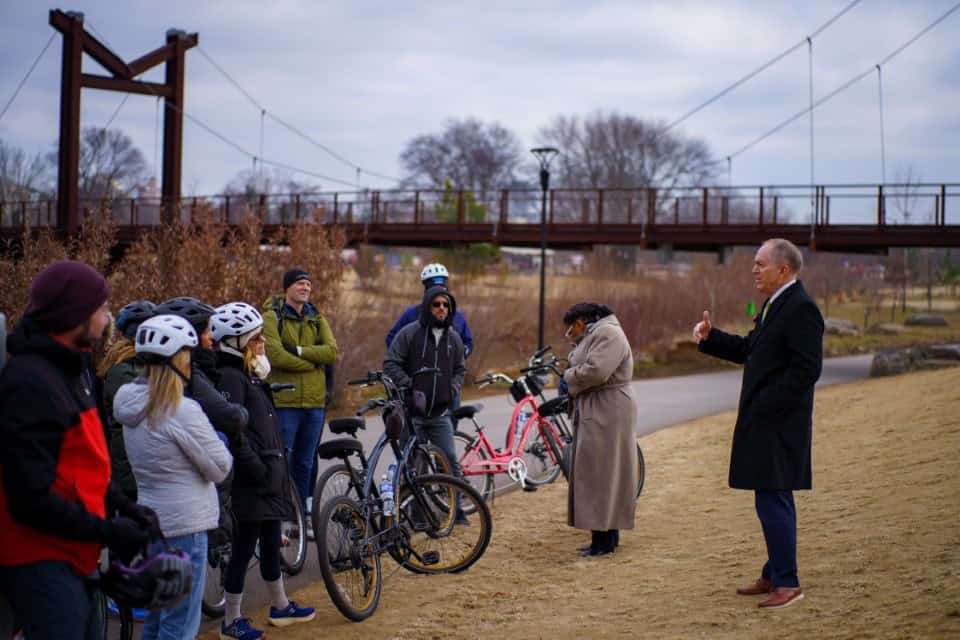
Mayor White emphasized that these iconic park features, and Unity Park itself, would not have been possible without the Swamp Rabbit Trail. The trail helped build momentum and public support for investment in this space, and it continues to shape how people access and use the park today. He explained that the land where we stood has a complicated history. It was once split into two segregated parks: Meadowbrook Park for white residents and Mayberry Park for Black residents. Neglect, environmental abuse, and racial inequity caused this land intended for recreation and community gathering to be used as a stockade, dog pound, junkyard, and police firing range.
Despite these conditions, the Black community in Greenville continued to use Mayberry Park as a gathering space, while advocates like EB Holloway, the city’s first African American postman, called on the city to make a larger, better park. Mayor White pointed out a mural in the park of EB Holloway and his wife titled “A Promise Fulfilled” and explained that Unity Park represents the city confronting this history and honoring that request 83 years later.
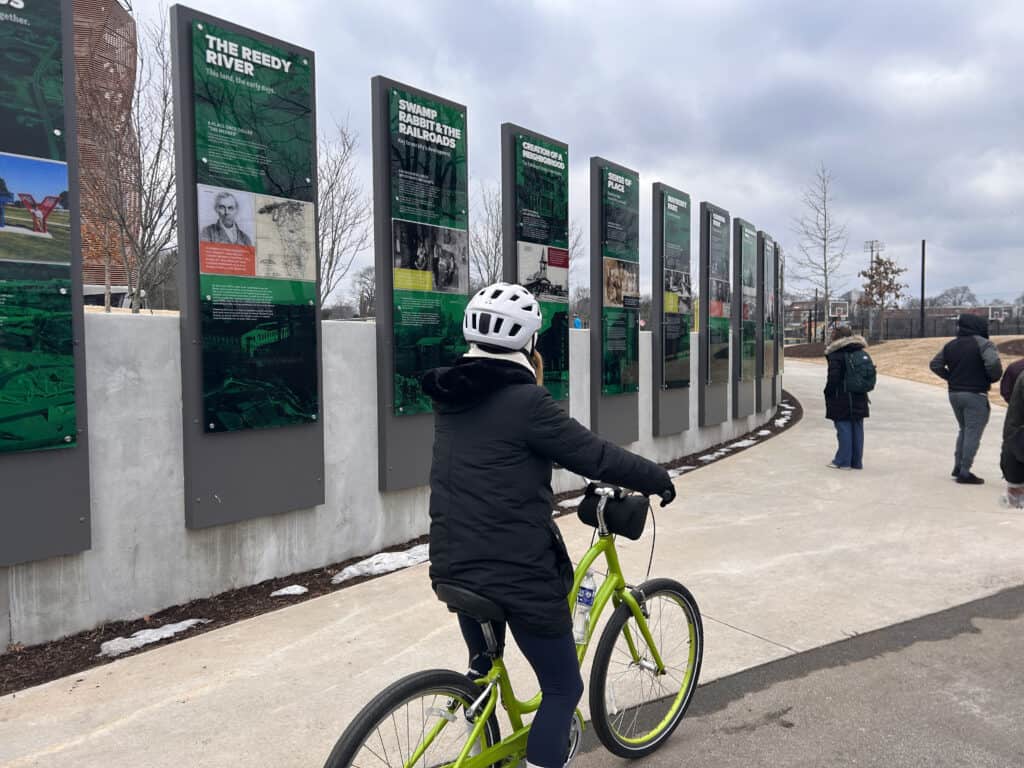
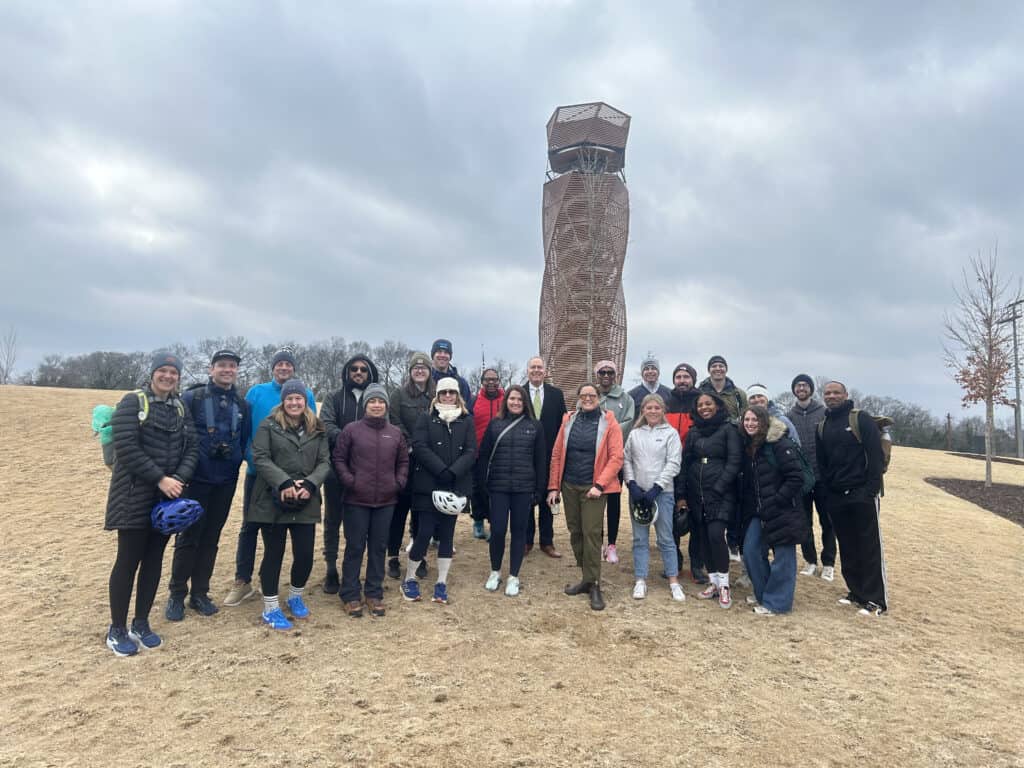
Today, Unity Park is a clear source of pride for Greenville. The Swamp Rabbit Trail was instrumental in shaping the park’s transformation and in making it part of the city’s identity. Its development helped drive hydrological improvement, with the park’s green space now functioning as resilience feature, capturing and diverting rainwater to help mitigate flooding. Along the Fall Line, we will have similar opportunity to integrate trail development with climate resilience.
back to the fall line
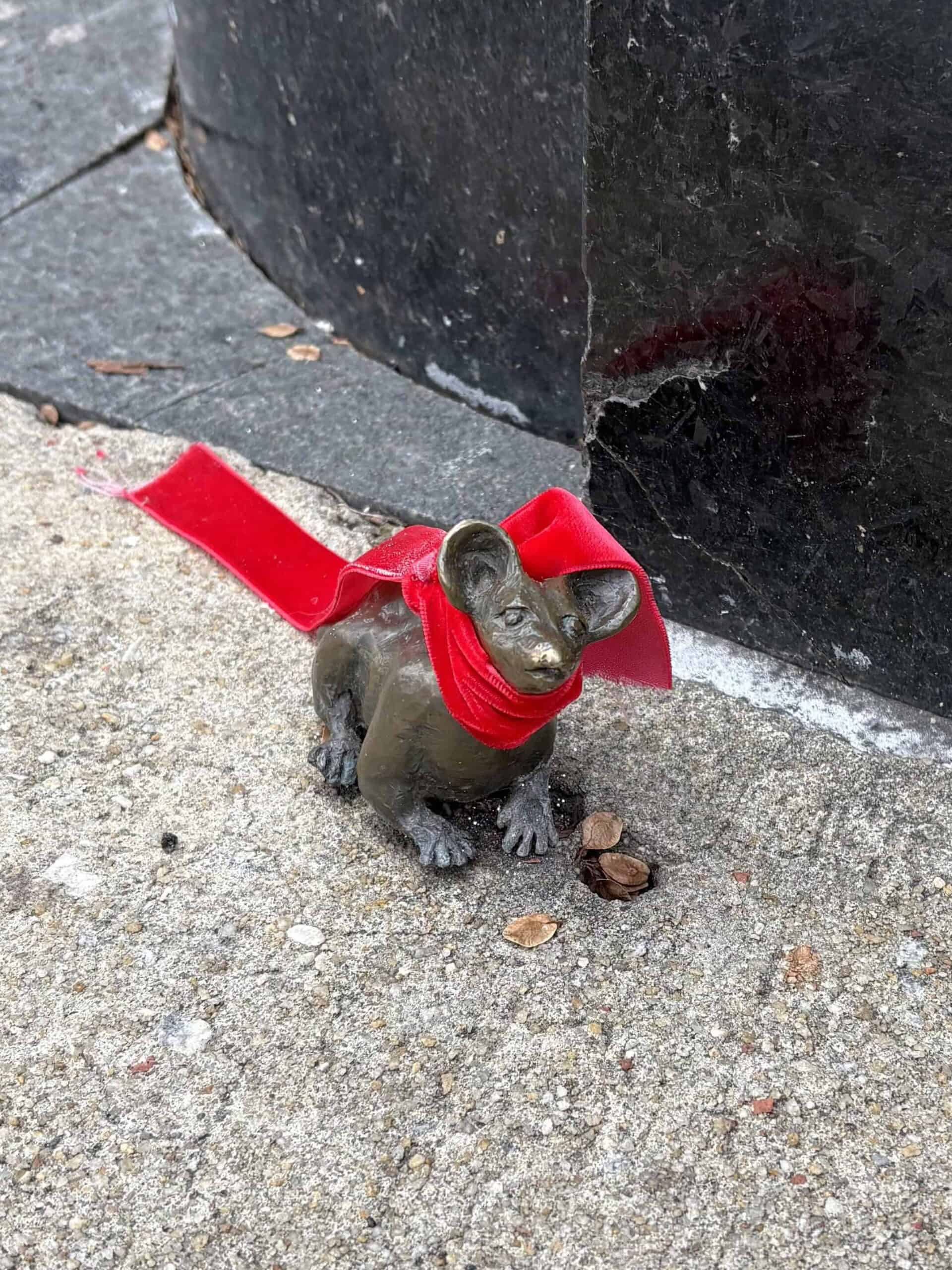
The purpose of Sports Backers’ study trips is to better understand what is possible when a region fully commits to a corridor over time. In Greenville, our staff and participants were impressed by the level of intentional placemaking, thoughtful branding, and consistent community engagement visible along the Swamp Rabbit Trail. From the littlest bronze mice dotted on downtown street corners, to trailside branded sunscreen dispensers, to tasteful and colorful signage thanking playground sponsors, everything connected back to a larger, shared vision.
The Fall Line is at an important stage. Decisions being made now about routing, design, trailside destinations, and activities will shape how the corridor functions and how it serves and reflects the communities it runs through for decades to come. Commitments to equity, resilience, and development will influence the growth patterns and public spaces that emerge around it.
In Greenville, we saw the Swamp Rabbit Trail as a clear driver of community and economic growth. It showed us how a trail can connect cultural destinations and activity centers and, over time, become a truly essential transportation network for a city. It also highlighted how intentional planning around housing and zoning can help align growth with community goals. These observations sparked conversations about the opportunities that exist across all seven localities that the Fall Line runs through.
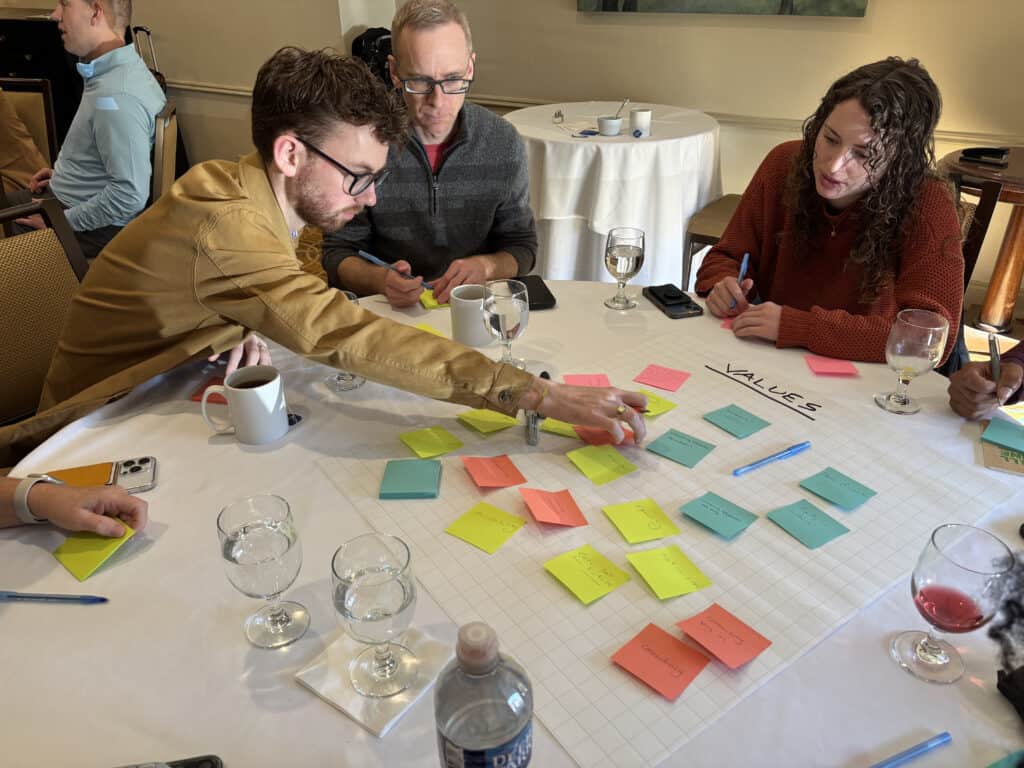
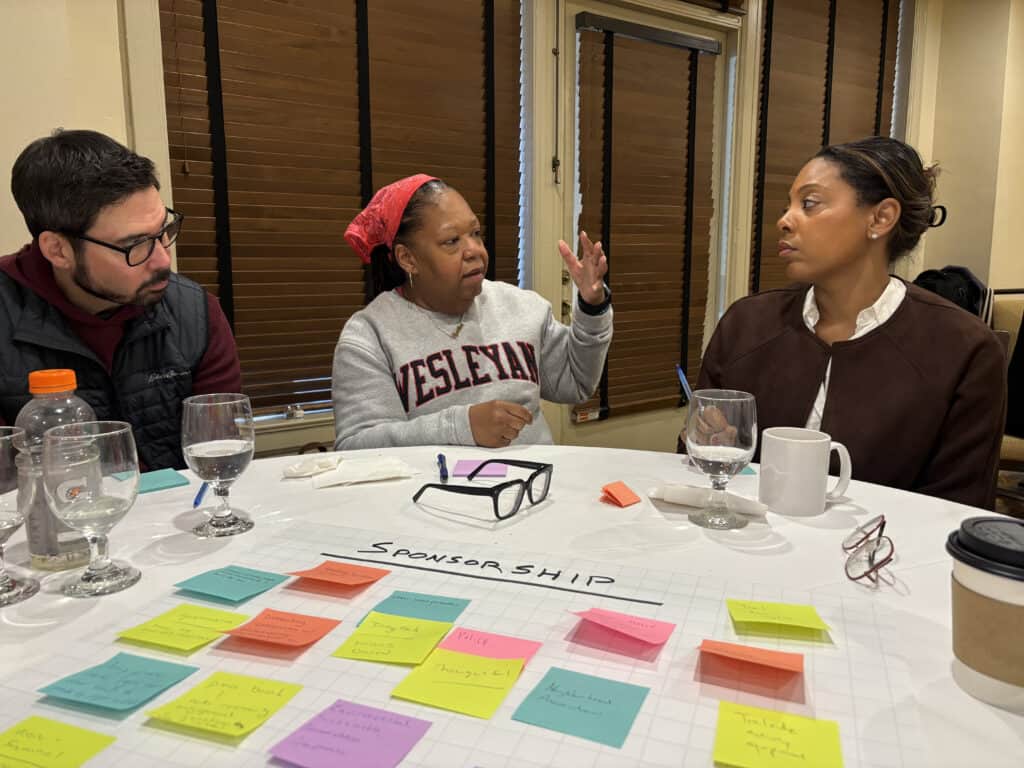
Over the next several blog posts, we will share more specific takeaways from Greenville and our other Sports Backers study trips. These posts will dive deeper into lessons related to placemaking, adaptive reuse, equitable development, and resilience. We left Greenville energized, with lists of practical ideas to explore, and new connections across our region. We know The Fall Line has the opportunity to become a defining piece of infrastructure for our communities, and the work ahead feels very important and very exciting!
Latest News & Updates
-
Swamp Rabbit Trail Study Trip to Greenville
Swamp Rabbit Trail Study Trip to Greenville Written by: Emily Schreer, Policy and Planning Manager In Greenville, South Carolina, the 28-mile Swamp Rabbit Trail has shaped how the city connects its neighborhoods, grows its economy, and invests in public space. In early February 2026, Sports Backers brought together developers, artists, foundations, nonprofits, and representatives from Richmond, Henrico,…
-
episode 113 – 100 runs of a lifetime with bart yasso
episode 113 – 100 runs of a lifetime with bart yasso For years Bart Yasso has been a name in the running industry, most notably he was the Chief Running Officer at Runner’s World Magazine. Now Bart is sharing his top runs in a book with National Geographic. One of his picks is the Ukrop’s…
-
dominion energy riverrock opens registration, announces music lineup for 2026 festival, and highlights impact of the brown’s island improvement project
dominion energy riverrock opens registration, announces music lineup for 2026 festival, and highlights impact of the brown’s island improvement project Written by: Nan Callahan, PR & Communications Manager national touring acts and regional favorites headline richmond’s signature outdoor sports and music celebration, may 15-17 RICHMOND, VA – Dominion Energy Riverrock, the nation’s premier outdoor sports…